How Winter Park's Waterfront Boards Shape Dock Projects
October 1, 2026
October 1, 2026
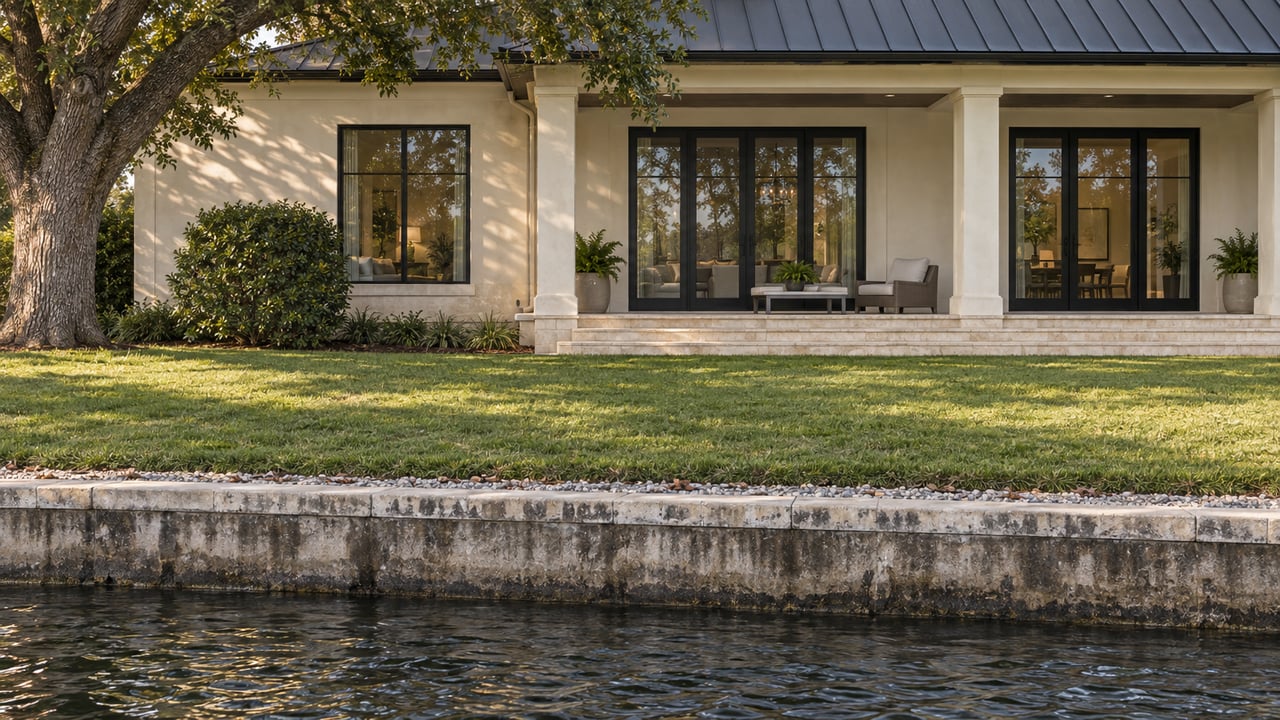
A buyer walks a lakefront home on Lake Osceola during the inspection period, and the dock looks tired. Boards are gray, a piling leans a few degrees off plumb, and the seller's disclosure calls it "functional, needs attention." The buyer's instinct is to treat it like any other punch list item: call a marine contractor, get a bid, schedule the work after closing. That instinct can be wrong in Winter Park when the work requires board review, for reasons that have nothing to do with the contractor's calendar.
For dock, boathouse, seawall, and revetment work that requires review, the city board must approve it before the building-permit step, and the board meets once a month.
The city's Lakes & Waterways Advisory Board holds quasi-judicial authority over waterfront structures under the city's own code, and its approval is not optional paperwork. According to the city's shoreline permitting page, docks and boathouses, except repairs that keep the original design and footprint, must receive site plan approval from the board before an applicant can even apply for a building permit, and the same sequence applies to seawalls and revetments, which need a shoreline alteration permit from the same board before work begins. A building permit is a second, separate step that only starts after the board has already signed off.
For projects that require board review, that ordering matters because the contractor's timeline and the city's timeline never run in parallel.
The board meets on a fixed schedule: the second Tuesday of every month. Site plan applications have to be in the hands of the city's Parks & Recreation Department by that same second Tuesday to be heard at the following month's meeting. Miss the cutoff by a day and the application does not slide into a shorter queue. It waits for the cutoff after that, which pushes the hearing back a full additional month.
Picture a buyer who closes in early July on a Lake Maitland property and immediately lines up a contractor to replace a failing dock with a design or footprint that requires new board review. If the application misses that month's second-Tuesday cutoff, the earliest the board can hear it is the following month. Site plan approval happens there, and only then can the building permit application start moving through its own review. A repair that might take two weeks of actual construction can take longer to get underway because of where the closing date landed relative to the board's recurring monthly deadline.
A generic "verify dock permits" line in a buyer's guide may not capture this timing detail. The friction is not the approval itself. Most straightforward, code-compliant projects get approved. The friction is the clock.
There is a meaningful exception, and it is worth knowing before assuming the worst. City code treats dock and boathouse maintenance differently from new construction or design changes. Repair work that maintains the exact original design and footprint, as previously approved in the dock's construction permit, does not require a new board hearing. The moment the design or footprint changes, though, a new site plan review is required, and the project is back on the monthly schedule.
Here is how that plays out for the range of projects a lakefront buyer is likely to face:
| Project type | Board site plan review required | Typical cost layer |
|---|---|---|
| New dock or boathouse | Yes | Building permit fee, varies by scope |
| Seawall or revetment, new or altered design | Yes | $100 shoreline alteration permit, plus building permit if structural work is involved |
| Repair that keeps the original permitted footprint and design | No, handled administratively | Building permit fee only |
| Any modification to an existing structure's size, shape, or location | Yes | Building permit fee, varies by scope |
The practical takeaway is that a like-for-like repair can move at a normal contractor's pace. Anything that widens a platform, adds a roof, extends past the current setback, or shows up without a permit on file for the original structure gets pulled back into the monthly hearing cycle.
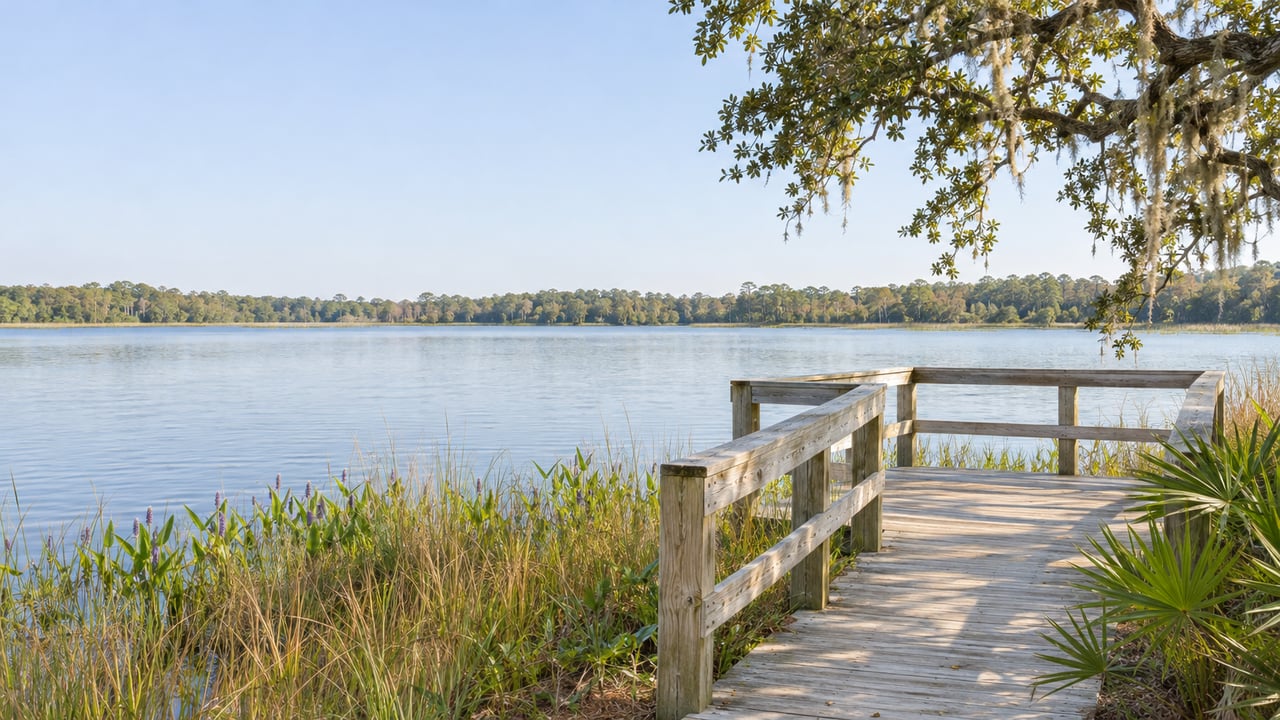
Winter Park's Chain of Lakes is six interconnected, spring-fed lakes, Virginia, Osceola, Maitland, Mizell, Nina, and Minnehaha, linked by canals dredged in the 1890s. Lake Killarney sits inside the same city but outside that canal system, and it has its own dedicated Lake Killarney Advisory Board that performs the identical dock and boathouse review function under a separate section of city code, distinct from the citywide Lakes & Waterways Advisory Board. A buyer comparing a Lake Osceola property to a Lake Killarney property is not just comparing water views. They are comparing which board, on which schedule, will decide any future dock or boathouse work.
Before a dock or boathouse permit can be issued, city code requires that shoreline vegetation meet a specific standard: no more than 50 feet, or 50 percent of the property's shoreline width, whichever is less, can be cleared. If a property has been over-cleared, whether through a previous owner's landscaping choices or years of mowing to the water's edge, re-vegetation must happen before the city will issue a permit for building, replacing, or modifying a dock or boathouse.
A buyer planning dock work can ask during inspection whether the shoreline meets the vegetation standard, so any needed re-vegetation and its timeline can be factored into plans alongside the board's calendar.
For a buyer or seller working through a Winter Park Chain of Lakes waterfront transaction, a few questions are worth settling early rather than during the inspection period crunch:
None of these questions changes whether a property is a good fit. They change how a buyer times a renovation, a repair, or a punch list item that looked simple from the dock itself.
Winter Park Chain of Lakes waterfront remains thin, sought-after inventory, with entry-level frontage generally starting near the $2 million mark and prime lake frontage reaching well into eight figures as of 2026. At that price point, a buyer has already done the work of falling in love with the water. For work that requires board review, the board's calendar is the detail that decides how soon they get to enjoy it from a repaired dock instead of a temporary one.
Does this process apply to a seawall repair, or only new construction? It applies to both. Any revetment or seawall work, new or altered, needs a shoreline alteration permit from the board before a building permit can be requested. Only dock and boathouse repairs that keep the original design and footprint are handled without a new board hearing.
What if I want to change my dock's footprint during what I thought was a simple repair? Any change to the original design or footprint requires a new site plan application and a hearing at the board's next available monthly meeting. The scope of the change is what triggers the review, not how minor it feels to the homeowner.
Who administers this if I'm on Lake Killarney instead of the main chain? Lake Killarney has its own dedicated advisory board handling the same dock and boathouse review duties, separate from the board that covers the rest of the Chain of Lakes. The process and standards are similar, but it is a different body with its own meeting schedule.
If you are weighing a Winter Park lakefront home and already picturing the dock work or the seawall repair that comes after closing, that timeline deserves a conversation before the offer goes in, not after. Misty Griffin can walk through what a specific property's waterfront history looks like on paper and how to build the city's calendar into your plans from day one.
This article is general information, not legal, tax or financial advice. Consult a qualified professional about your situation.
Stay up to date on the latest real estate trends.

Representing the most coveted properties on the market.